Top 10 sustainable tech businesses are adopting in 2026
Visionect, 5 Feb 2026
In 2026, sustainability is showing up in practical, everyday decisions. Rather than waiting on major infrastructure projects or long-term roadmaps, businesses are adopting devices that reduce energy use, cut waste, and improve efficiency right away.
Across offices, retail spaces, cultural centers, and campuses, these tools are being installed quietly and at scale. Below are 10 types of sustainable tech devices gaining real traction this year, along with how businesses are using them.
1. Smart thermostats designed for commercial buildings
Commercial-grade smart thermostats such as Google Nest Pro, ecobee SmartBuildings, and Honeywell Home T-Series are widely deployed in offices, retail chains, and hospitality spaces.
Unlike consumer models, these wall-mounted devices integrate occupancy sensors and scheduling intelligence, automatically reducing heating and cooling in unused spaces. Businesses often see immediate energy savings without changing employee behavior.
2. E-paper digital displays replacing printed and powered signage
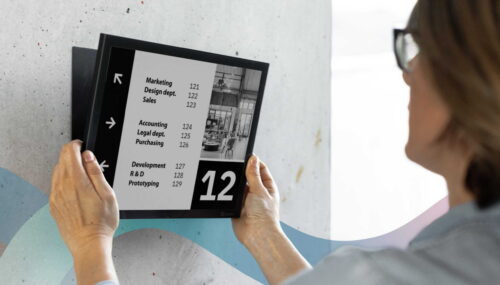
E-paper digital displays like Visionect Place & Play are becoming a go-to replacement for printed posters and always-on LCD screens.
Retailers use them for promotions and pricing, offices for wayfinding and room schedules, and cultural centers such as libraries, museums, and creative arts centres, use them to guide visitors. These devices consume power only when content updates, then hold the image without electricity, dramatically lowering energy use while eliminating paper waste.
3. Sensor-embedded LED light fixtures for offices and warehouses
Lighting manufacturers, like Signify (Philips) and Acuity Brands, now sell LED fixtures with built-in motion, daylight, and occupancy sensors.
These devices are installed directly in ceilings and automatically dim or switch off when spaces are empty. Warehouses, parking garages, and corporate offices benefit from lower electricity use and fewer maintenance replacements due to the long lifespan of LEDs.
4. Smart power strips and energy-monitoring plugs
Devices such as Eve Energy and TP-Link Kasa Smart Plugs allow businesses to control energy use at the outlet level.
IT teams use these devices to shut down monitors, kiosks, and peripherals overnight, eliminating phantom energy drain. They’re especially popular in coworking spaces, retail back offices, and schools where devices are often left on unintentionally.
5. E-ink tablets and paperless workflow devices
E-ink tablets like reMarkable, BOOX, and Sony Digital Paper are being adopted in logistics, healthcare, and field services.
These devices replace printed manuals, clipboards, and forms, offering weeks of battery life and minimal energy consumption. Businesses reduce paper usage while giving employees lightweight, durable tools that work well in bright or outdoor environments.
6. Smart water meters and leak detection sensors
Devices such as Phyn Plus, Moen Flo, and Droplet meters monitor water usage in real time and detect leaks early.
Installed under sinks, near toilets, or on main water lines, these compact devices alert facilities teams to abnormal usage before small leaks become expensive damage. Hotels, office buildings, and manufacturing sites increasingly treat water efficiency as a sustainability priority.
7. Electric cargo bikes and compact delivery EVs
For last-mile delivery and on-site operations, businesses are turning to devices like Tern cargo bikes, Urban Arrow, and compact EVs such as the Ford E-Transit or Rivian Commercial Van.
These vehicles reduce fuel costs, emissions, and noise while meeting urban delivery requirements. Retailers, food services, and maintenance teams use them where full-size vehicles are unnecessary or inefficient.
8. Smart waste and recycling bins with AI sorting
AI-enabled waste devices from companies like Winnow and Ecube Labs use cameras and sensors to identify materials as they’re disposed of.
These bins guide users to recycle correctly and provide data on waste streams. Corporate campuses, airports, and cafeterias use them to reduce landfill contamination and track sustainability metrics more accurately.
9. Energy-efficient office monitors and peripherals
Office hardware has quietly become more sustainable. Devices such as Dell UltraSharp ENERGY STAR monitors, HP E-Series displays, and low-power laptops with recycled materials are standard in many refresh cycles.
Businesses replacing older equipment see immediate reductions in electricity use and benefit from devices designed for longer life and easier recycling.
10. Indoor air quality and occupancy sensor devices
Compact sensor devices like Awair for Business, Netatmo Smart Indoor Air Quality Monitor, and Ubiqisense sensors are now installed in ceilings and meeting rooms.
These devices monitor CO₂, humidity, temperature, and occupancy, triggering ventilation or lighting adjustments only when needed. The result is lower energy use and healthier work environments.
How businesses decide which sustainable devices to deploy first
When organizations begin upgrading their physical tech stack, they rarely start with the most complex projects. In 2026, most sustainability-driven deployments follow a similar decision pattern:
- Low installation friction
Devices that can be mounted, plugged in, or swapped during routine refresh cycles move fastest. Smart thermostats, e-paper displays, smart plugs, and sensor-based lighting often replace existing equipment without requiring structural changes or downtime. - Immediate, measurable impact
Businesses prioritize devices that reduce energy, water, or waste as soon as they’re installed. If savings can be demonstrated within weeks rather than years, internal approval and wider rollout are much easier to justify. - Visibility in daily operations
Tools that employees and visitors can see, such as digital signage, air quality sensors, and smart waste bins, help reinforce sustainability goals without formal training or behavior change programs. - Centralized management and data
Devices that report usage, trigger alerts, or integrate with existing building or IT systems are favored. Facilities and operations teams increasingly rely on this data to track performance, support reporting, and scale deployments over time. - Scalability across locations
For multi-site organizations, consistency matters. Devices that can be deployed across offices, stores, or campuses with the same configuration and policies tend to win out over custom solutions.
Together, these criteria allow businesses to make sustainability tangible, measurable, and repeatable without slowing down operations.
Sustainable tech is becoming tangible and visible
What sets 2026 apart is how visible sustainable tech has become. From e-paper displays on the wall to smart plugs under desks, sustainability is no longer abstract or hidden behind infrastructure projects. It’s built into the everyday tools businesses already rely on.
For organizations beginning their sustainability journey, device-level upgrades offer a practical starting point. They deliver measurable impact quickly, scale easily, and improve operations without disruption.
Looking for a low-disruption sustainability upgrade?
Start with e-paper signage.
Get in touch to find the right solution for your space